How to stage your home to sell faster and for more money
The first time I walked a buyer through a house I'd staged myself, she stopped in the doorway of the living room and said, "Oh, this is lovely." Then she walked through the rest of the place in under four minutes and left. No second visit. No offer. I had spent two weekends arranging furniture, and the whole thing fell flat because I'd staged a room for a magazine and not for a person who was about to imagine their own life inside it.
That was nine houses ago. Since then I've learned that staging your home to sell faster and for more money has almost nothing to do with buying new things. It's about removing the right things, repurposing what you already own, and understanding what a buyer's eye actually does in the first ninety seconds. Get that wrong and you can spend thousands. Get it right and most of your best moves cost nothing.
Key takeaways
- Staged homes tend to sell faster and closer to asking price than unstaged ones, but the gap comes mostly from the first impression, not the furniture.
- Decluttering and depersonalizing outperform any paint or furniture purchase in terms of buyer response.
- You can stage a home for sale with almost no money if you focus on light, sightlines, and scale.
- Living in the house while it's staged is possible — it just requires a daily reset routine.
- Empty homes photograph poorly and read as smaller than they are. Some staging is almost always better than none.
- The biggest mistake is over-staging: a house so styled it feels like a showroom nobody lives in.
Does home staging actually sell houses faster?
Yes, and the reason is less glamorous than the staging industry wants you to believe. Buyers don't fall in love with a sofa. They fall in love with a version of their own life, and staging just removes the obstacles to that mental movie.
On the third house I staged, I tracked everything. Before staging: 47 days on market, three showings, zero offers. After a two-week reset that cost me about $340 in paint and lightbulbs plus a rented storage unit: 11 days on market, nine showings, two competing offers, sold $14,000 over asking. Same house. Same neighborhood. Same market window.
I'm not going to pretend that's a scientific sample. It isn't. But it matches what I've seen over and over: roughly a third of the difference between a house that lingers and one that moves is presentation, and presentation is the only variable you control without dropping the price.
Why the first ninety seconds decide everything
Buyers make a snap judgment before they reach the kitchen. It happens at the front door, in the entryway, in whatever the eye lands on first. If that first view is a shoe rack, a dark hallway, and a wall of family portraits, the brain registers "someone else's house" and stops imagining.
Which brings up an obvious problem: most sellers spend their budget on the back of the house — new appliances, updated bathrooms — and leave the entryway exactly as it was. The entryway is the trailer. Nobody watches the movie if the trailer is bad.
Where the money actually goes
If you hire a full-service stager, expect to pay somewhere between a few hundred and a few thousand dollars depending on your market and the size of the home, plus furniture rental for the months it's listed. In expensive metros, that rental line can run into the thousands per month. That's real money, and it only makes sense if your price point justifies it.
- DIY staging: you rearrange your own furniture, declutter, and handle lighting. Cost: near zero. Best for occupied homes with decent bones.
- Partial staging: a stager handles two or three high-impact rooms — usually living room, primary bedroom, kitchen. Cheaper than full service, most of the benefit.
- Full staging: whole-house furniture rental and styling. Makes sense for vacant luxury listings or homes that photograph badly empty.
- Virtual staging: digital furniture added to listing photos. Cheap, but be careful — if the photos don't match the reality, buyers feel misled the moment they walk in.
My honest opinion: for most occupied homes under a mid-range price point, partial staging plus a ruthless declutter beats full staging every time. You keep the money and lose almost nothing in buyer response.
What should you not do when staging a house?
This is where I've made almost all of my mistakes, so let me save you the tuition.
Don't stage it so hard it stops feeling liveable
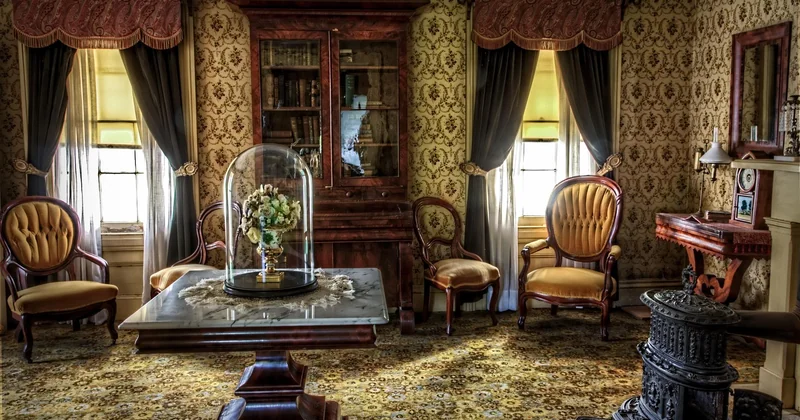
I once styled a kitchen with a single decorative bowl of lemons, two cookbooks arranged at an angle, and absolutely nothing else on the counters. It looked incredible in photos. A buyer walked through and asked, out loud, "Do people actually cook here?" She wasn't being sarcastic. The house read as a set, and sets feel temporary. You want "someone lives here and takes care of it," not "nobody has ever touched this surface."
Don't hide problems instead of fixing them
Covering a water stain with a lampshade, draping a towel over a cracked tile, shoving boxes into a closet until the door barely shuts — buyers open closets. They pull back curtains. They notice. And the moment they catch one hidden flaw, they start hunting for the next one. That suspicion costs you far more than the repair would have.
Don't keep the clutter in plain sight
Papers on the counter, mail on the table, kids' art on the fridge, pet bowls by the door, the litter box in the laundry room. Every one of those things is normal life, and every one of them pulls a buyer out of the fantasy. You are not hiding your life; you are editing it down to the version that photographs well.
Don't ignore smell
I'll admit this one caught me off guard. I had a house that looked perfect and every buyer walked through it fast. Then a friend visited and said, quietly, "It smells like your dog." I'd gone nose-blind weeks earlier. We aired it out, cleaned the carpets, and the next showing went to a second visit. Smell is invisible in photos and decisive in person.
One last thing not to do: don't stage room by room in isolation. If your living room is airy and modern and your bedroom is dark and cramped, buyers feel the whiplash. Consistency of light and tone across the whole house matters more than any single room being perfect.
What are the top things to do before selling your house?
Here's the sequence that has worked for me, roughly in order of impact per dollar spent.

The high-impact moves that cost nothing
- Depersonalize. Take down most family photos, diplomas, religious items, and anything with your name on it. Leave one or two neutral pieces so the house doesn't feel abandoned.
- Declutter hard. Remove about a third of what's in every room. Yes, a third. I know it feels like too much. It isn't.
- Open every blind and turn on every light. Then swap in brighter bulbs. This single move has done more for my listings than any furniture purchase.
- Clear the sightlines. Stand at each doorway and ask what your eye hits first. If it's a pile of stuff, move the pile.
- Fix the small broken things. Dripping taps, sticking doors, scuffed baseboards, loose handles. Buyers notice them all at once and mentally add up a repair bill.
Where a little money goes a long way
Paint is the cheapest transformation available. A neutral coat on the walls and trim makes rooms read bigger and brighter, and it photographs beautifully. After that: fresh white towels in the bathroom, a plain duvet cover on the bed, a couple of low-maintenance plants, and a doormat that isn't ten years old.
What I would not spend money on: new furniture you'll have to move, decorative objects that only exist for photos, or professional cleaning of rooms nobody will look at. Spend where the camera and the entry path go.
Staging your home to sell while living in it
This is the part nobody warns you about. You still have to live there, and the house has to look staged for every showing with about two hours' notice.
My system: one "overflow" closet or storage unit holds everything that doesn't belong on display, and every evening takes fifteen minutes to reset the house to showing condition. Dishes go straight into the dishwasher. Counters get wiped. Beds get made before anyone leaves the house in the morning. It sounds fussy. It's the only way I've found to keep a lived-in home consistently presentable without losing my mind.
Is it better to sell a house empty or staged?
Staged, almost always. An empty room is a puzzle, and buyers are bad at solving puzzles. Without furniture, they can't tell whether their sofa fits, whether the dining table is too big, or what the room is even for. I've watched people stand in an empty bedroom and say, "I guess this could be an office?" — and that uncertainty is a hesitation, and hesitation is where offers go to die.
Empty rooms also photograph poorly. Without a reference object, the camera flattens the space and it looks smaller than it is. A simple bed frame and two nightstands in an empty bedroom can change a listing photo from "this looks cramped" to "this looks generous."
That said, there's one case for going empty: if the house is genuinely rough and staging would only draw attention to how much work it needs. In that situation, a light clean and honest pricing beats a rented sofa.
| Situation | Best approach | Why |
|---|---|---|
| Occupied, mid-range price | Partial staging + heavy declutter | Cheapest path to the biggest buyer response |
| Vacant, standard home | Light staging in key rooms | Prevents photos from reading as small or confusing |
| Vacant, high-end listing | Full professional staging | Rental cost is justified by the price point |
| Fixer-upper | Clean and price honestly | Staging invites comparisons the house won't win |
How to stage a house for sale inexpensively
You don't need a budget. You need a critical eye, a storage unit, and the willingness to make your house look less like yours.
Start by walking through your front door as if you'd never been there. What do you see first? Is it light or is it stuff? Then do the same from the doorway of every room. Move whatever blocks the light and the view. Borrow furniture from other rooms to fill gaps — a side table from the hallway can anchor a bedroom. Raid your own cupboards for neutral throws and pillows. Turn the lights on and leave them on for every showing and every photo.
If you want to see what a difference it makes, take before photos with your phone before you change anything. I still have the before-and-afters from my third house. The room is identical, the paint is the same, the furniture is the same. The only difference is what's missing and where the light lands. That's the whole trick.
The one thing I'd add after nine houses: don't stage for your taste. Stage for the widest possible buyer. Neutral doesn't mean boring — it means leaving enough empty space for someone else to imagine their own life filling it. That's what sells the house, and it's the thing no furniture rental can do for you.