Two years ago, a couple I'll call Marc and Sophie spent eleven weekends touring open houses before they put in their first offer. By then they'd lost two homes to buyers who moved faster, and their daughter had started asking why they kept walking through other people's kitchens. What broke the deadlock wasn't a bigger budget. It was a spreadsheet.
They'd been shopping for a house. What they actually needed was a neighborhood—and they had no method for judging one. That's the trap most families fall into when figuring out how to choose the right neighborhood: they treat location as a filter you apply at the end, when it's really the entire decision. The house can be repainted, rewired, extended. The things that make you miserable at 7am on a Tuesday are fixed the moment you sign.
Key Takeaways
- Judge a neighborhood on three separate clocks: the commute clock, the school clock, and the resale clock. They rarely agree.
- The 3-3-3 rule is a rough screening tool, not a rule of law—treat it as a starting point for questions, not an answer.
- Grandma's house rules still apply: the three things that hurt a home's value hardest are a bad location, deferred maintenance, and an awkward layout.
- Visit at three different times of day. Nobody selling a house shows you the street at 6:45pm on a Thursday.
- A family of seven in three bedrooms is workable—but only if you count bathrooms, storage, and noise before you count bedrooms.
The 3-3-3 rule, and what it actually means for your search
What is the 3-3-3 rule in real estate? It's a common shorthand: a home should sit within roughly three minutes of emergency services, three miles of a grocery store or everyday essentials, and three blocks of a school. Some versions swap the school for a park. The point isn't the exact numbers—it's that you're testing a location against the errands and emergencies that actually fill a family's week.
I'll be honest: when I first heard this, I rolled my eyes. Three minutes from emergency services? In a city, that's almost every address. In a rural area, it's almost none. But the rule earns its keep once you stop treating it as a pass/fail and start using it as a checklist of questions to ask.
How to use it without being rigid
Take the three distances and run them against your real life, not an imaginary one.
- Is there a hospital or urgent care you can reach without getting on a highway?
- Can you buy milk and bread without driving across town?
- Would your kid walk to school, or would you be in the car twice a day for the next decade?
That third one matters more than most buyers admit. A school that's "close" on a map but sits on the far side of a six-lane road isn't walkable—and you'll be the one driving. Which brings up the honest limitation: the 3-3-3 rule tells you about convenience and nothing about quality. A neighborhood can pass all three and still have schools you wouldn't send your kids to, or a street that empties out after dark. Use it as a first filter, then dig.
How to tell if it's a good neighborhood
Every listing description says "desirable neighborhood." None of them mean anything. You have to build the picture yourself, and the good news is that most of the signals are free and public if you know where to look.
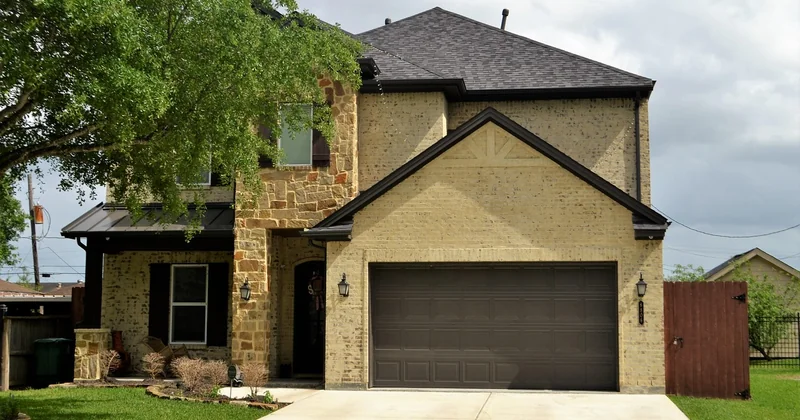
Check the numbers before you check the vibe
Start with data, because data doesn't flatter. Crime registries, census figures, and school rating sites will give you a factual baseline for any address in about twenty minutes. Pull the same numbers for two or three candidate neighborhoods and compare them side by side rather than judging each in isolation—context is everything. Walk Score and similar tools are useful for the walkability question specifically; they won't tell you whether you'd enjoy living there.
Then check the vibe, which the numbers can't capture
Here's where I'd push back on every checklist you've ever read. Data tells you what a place is. It can't tell you what it feels like on a Saturday morning.
- Drive the street at rush hour, at school pickup, and after dark on a weekend.
- Knock on two doors and ask how long people have lived there—long tenures are the strongest signal of a healthy street I know of.
- Walk to the nearest park and count how many kids are actually playing.
- Check local planning notices. A quiet lot across the road can become a distribution center.
Real talk: the planning notice step is the one people skip, and it's the one that bites. I watched a family buy a lovely house backing onto what they assumed was permanent green space. Two years later, permits went up for a small apartment block. Nothing illegal happened. They simply never looked.
What decreases property value the most
What decreases property value the most? The short answer, and the one that has held up for as long as anyone has been buying homes, is location. A home's value is anchored to its position, and no amount of renovation overcomes a bad one. The other two big hits are deferred maintenance and an awkward layout—both of which are largely within a seller's control, which is why a neglected roof or a floor plan nobody can furnish drags a price down faster than almost anything else.

Beyond the big three, there are quieter factors that show up repeatedly in real transactions.
| Factor | Typical effect on value | Can you fix it? |
|---|---|---|
| Bad location (busy road, industrial neighbor) | Persistent discount, hard to shake | No |
| Deferred maintenance (roof, HVAC, siding) | Buyers price in repairs and then some | Yes, with money |
| Awkward layout (no flow, tiny kitchen) | Narrows your buyer pool sharply | Sometimes, at real cost |
| High local taxes with weak services | Suppresses demand over time | Not by you |
| Poor school district | Shrinks the number of interested families | No |
Notice that the fixable problems are all on the house, and the unfixable ones are all on the land. That's the whole argument for spending your energy on the neighborhood first.
Can a family of 7 live in a 3 bedroom?
Yes, but the arithmetic is less about bedrooms than people expect. Seven people in three bedrooms means an average of just over two per room—which is entirely normal in much of the world—and the real constraint is almost never sleeping space. It's everything else.
Count these before you commit:
- Bathrooms. One bathroom for seven people is a scheduling problem, not a housing one. Two changes the whole feel of a morning.
- Storage. Seven people generate a lot of stuff. Where does it all live?
- Noise and privacy. Walls are thin. Everyone will hear everything. Is that a dealbreaker for you?
If you're comfortable with bunk beds, shared rooms, and a bit of choreography around the bathroom, three bedrooms can work for years. Where families get into trouble is buying the three-bedroom that technically fits but has no garage, no storage, and a single bathroom—then discovering the space problem isn't about the count of rooms at all.
What about the resale side?
Here's the uncomfortable part. A three-bedroom house is the most common family home there is, which means it's also the easiest to sell. But if you've adapted it heavily to fit seven—converted the garage, walled off the dining room—you may have narrowed your future buyer pool. That's a trade-off, not a mistake. Just make it knowingly.
What to look for when buying a home
Pull it all together and the search stops feeling like instinct and starts feeling like a process. My advice, and I'll hold this line: do the data work first, then visit, then revisit at a different hour. Most people do it in exactly the wrong order—fall in love with a house, then scramble to justify the neighborhood.
If there's one habit worth stealing from Marc and Sophie, it's this. They finally built a simple scoring sheet—safety, schools, commute, walkability, tax burden, ten-year outlook—and gave each factor a weight based on what their family actually valued. When they scored the homes they'd already toured, the house they'd fallen hardest for landed fourth. The one they eventually bought had never made their shortlist, because they'd judged it on a Saturday and never gone back on a weekday.
And that's the thing nobody tells you about choosing a neighborhood. The right one won't announce itself with a perfect house. It'll look slightly unremarkable on a listing site, and then you'll stand on the sidewalk at 8am on a Tuesday, watch a neighbor wave across the street, and realize you've already stopped thinking of it as a place you're visiting.