Two years ago I helped my sister list a three-bedroom house she'd owned for eleven years. She was convinced the kitchen would make or break the sale. She'd already gotten two quotes, both north of $40,000, and she was ready to sign. I talked her out of it. We spent about $4,200 total: paint, new cabinet hardware, a light fixture, and a deep clean of the grout. The house sold in nine days, $18,000 over asking.
I'm not telling you renovations never matter. I'm telling you the ones that move the needle are almost never the ones sellers obsess over. Simple renovations that increase your home's resale value tend to be cheap, fast, and boring. That's the part nobody wants to hear, because it doesn't make for a good before-and-after photo.
Key Takeaways
- Most projects recover only part of their cost — some recover more than 100%, many recover less than half. Knowing which is which is the whole game.
- The "simple" improvements (paint, lighting, hardware, landscaping, decluttering) consistently deliver the strongest return per dollar spent.
- The 30% rule is a budget guardrail, not a law of real estate. Treat it as a ceiling, not a target.
- Buyers pay for perceived condition and light, not for the receipt from your contractor.
- Mid-range beats luxury almost every time. An over-improved house is a real risk, not a theoretical one.
Simple renovations that actually add value — and what they really return
I've watched dozens of sales close over the years, both as a helper and as a nosy neighbor with too much time on my hands. The pattern is brutally consistent. Cheap cosmetic work wins. Heavy structural work usually just gets you back to even.
Here's the thing most sellers get backwards: you're not renovating for yourself anymore. You're renovating for a stranger who will walk through your house in eleven minutes and decide, mostly on feeling, whether they want to live there.
The cheap stuff that punches above its weight
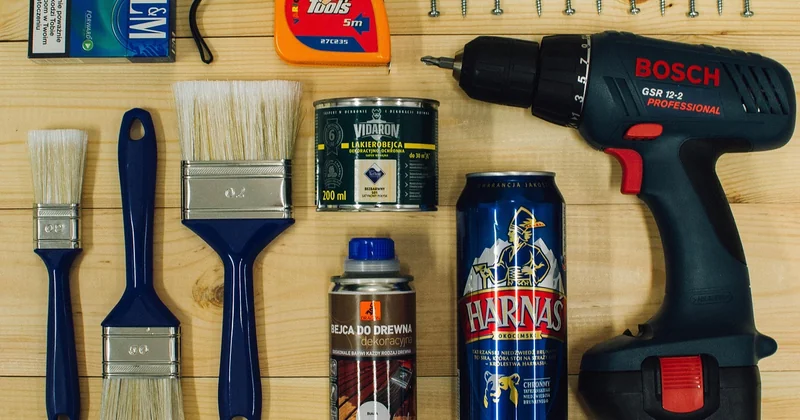
Interior paint is the single best dollar you will ever spend. A neutral repaint of the main living areas costs a few hundred dollars in materials if you do it yourself, and it resets how every other room reads. New lighting is a close second. Replacing dated brass fixtures with simple modern ones takes an afternoon and changes the entire mood of a hallway.
Then there's the unglamorous tier: regrouting tile, replacing outlet covers, fixing the sticking door, tightening the loose banister. None of these will show up in a listing description. All of them register subconsciously as "well-maintained," which is a phrase buyers use to justify paying more.
- Paint the walls and ceilings in the main rooms — budget roughly $300 to $800 doing it yourself
- Swap out cabinet hardware and light fixtures for modern equivalents — under $200 in most kitchens
- Deep clean everything, then clean it again
- Fix the small broken things you've stopped noticing
- Curb appeal: mow, edge, mulch, pressure-wash the driveway
I'll admit I was skeptical about the last one for a long time. Then I watched a buyer's agent spend four full minutes examining a front porch while completely ignoring the refinished basement. First impressions are front-loaded. There's no way around it.
Mid-range projects worth considering
A minor kitchen refresh — refacing cabinets, new countertops, a modern faucet, updated appliances that match — is one of the few mid-size projects that tends to pay for itself. Full gut renovations rarely do. Same story with bathrooms: updating a vanity, mirror, and fixtures recovers far more of its cost than moving the plumbing around.
Windows are worth a mention because they're misunderstood. Replacing old single-pane windows with modern double-pane units helps with energy bills and appraisals, but the full sticker price almost never comes back at sale. Do it for comfort if you're staying. Don't do it the month before you list.
What renovations add the most to resale?
If I had to rank them by return per dollar, the order looks like this: cosmetic refresh first, then garages and exterior siding, then minor kitchen work, then bathrooms, then everything else. The ranking barely changes whether you're selling in a hot market or a slow one.
The reason garages and siding beat kitchens surprises people. They're not exciting, but they're cheap relative to the value they signal. A new garage door costs a fraction of a kitchen remodel and reads instantly as "this house is cared for."
| Project | Typical cost range | Share of cost recovered | Effort level |
|---|---|---|---|
| Interior paint | $300–$2,000 | Often over 100% | Low to moderate |
| Garage door replacement | $1,500–$4,000 | Roughly 80–100% | Professional job |
| Minor kitchen refresh | $15,000–$30,000 | Around 70–85% | High |
| Bathroom remodel (mid-range) | $12,000–$25,000 | Around 60–75% | High |
| Major kitchen gut | $50,000+ | Frequently under 60% | Very high |
| In-ground pool | $40,000+ | Usually well under 50% | Extreme |
Two caveats before you treat that table as gospel. First, these ranges shift by region and by how hot your local market runs — in a brutal seller's market, almost everything recovers more, and in a cold one, almost everything recovers less. Second, the numbers assume the work is done well. A botched mid-range project recovers nothing and can actively subtract value.
What is the 30% rule in remodeling?
The 30% rule is a budget guardrail: keep your total remodeling spend at or below roughly 30% of your home's current value. On a $400,000 house, that means capping the project around $120,000. The logic is that you don't want the renovation to outweigh the house itself in the buyer's mind.

Where the rule helps, and where it breaks
It's genuinely useful as a ceiling. It stops people from turning a $300,000 house into a $600,000 house in a $320,000 neighborhood — a mistake I've seen twice and it's painful to watch. But it's a blunt instrument.
Spend the same 30% on a cosmetic refresh and on a luxury basement conversion, and you'll get wildly different outcomes. The rule doesn't care about which renovation you're doing, and that matters far more than the total. Another version of the rule you'll hear is about individual projects: don't spend more than 30% of your home's value on any single room. That one's even cruder and I'd ignore it in favor of just watching your project-level returns.
What are some cheap home improvements that can increase my home's value?
Under $1,000, you're not renovating. You're staging. And staging is where the real arbitrage lives, because most sellers skip it entirely.
- Declutter aggressively. Rent a storage unit if you have to. Empty surfaces read as space, and space sells.
- Replace every dated light switch plate and outlet cover. It sounds absurdly small. Do it anyway.
- Re-caulk the tubs and sinks. Old mildewed caulk is the fastest way to make a bathroom feel neglected.
- New bedding and towels in white. Cheap, and it photographs beautifully.
- Fresh mulch and a potted plant by the front door.
- Professional photos, if you're listing yourself.
- Remove half the furniture from each room. You'll think it looks empty. It looks right.
I once watched a seller spend $600 on decluttering and $0 on renovation and get a better outcome than a neighbor who'd dropped $20,000 on new flooring. The flooring was genuinely nicer. The house just felt crowded, and buyers couldn't see past it.
How to increase home value by $50,000?
Honestly? There's no single switch. Reaching a $50,000 jump is usually a combination, and the mix depends entirely on where your house currently sits relative to the neighborhood.
The realistic path for most homes looks like a stack: a cosmetic refresh across the main living areas, one strategic mid-range project (kitchen or bath, not both), and a strong curb appeal push. On a typical mid-market home, that combination moves the number meaningfully — sometimes to $50,000, sometimes to $25,000, sometimes less.
The one thing that reliably adds five figures without construction is adding usable space or a bedroom. Converting a basement or attic, or finishing a garage, changes the category your house competes in. A three-bedroom becomes a four-bedroom, and four-bedrooms get compared to other four-bedrooms. That's a different bracket entirely. It's also expensive and slow, which is why nobody puts it on a "simple renovations" list.
The honest caveat
You can't renovate your way past a bad location, a declining market, or a neighborhood ceiling. I've seen a beautifully renovated house sit for five months because it was the nicest home on a street where buyers weren't looking. You can improve what you have. You cannot out-build your zip code.
The renovations that quietly destroy value
Two more things, because everyone talks about what to do and nobody talks about what to skip.
Skip anything highly personal. Bold feature walls, custom built-ins for a hobby, a sunroom that only works for one kind of family — these cost money and shrink your buyer pool at the same time. Skip the pool unless you're in a market where pools are standard, because the maintenance burden scares off more buyers than the amenity attracts.
And be careful with over-improving in general. If your renovation makes your house the most expensive on the block by a wide margin, appraisers will notice. So will buyers, who'll wonder why they're paying a premium to live next to homes that don't match. In my experience, that gap is the single most common way sellers lose money on a project that was, on its own terms, done beautifully.
The honest version of this whole topic is unglamorous: clean, bright, neutral, and well-maintained beats expensive and personalized almost every time. Your renovation should make the house easier to imagine living in, not harder.
So before you sign that contractor quote, ask yourself one question. Are you renovating to sell, or renovating because you've been staring at the same backsplash for eleven years? Both are fine reasons. But only one of them is going to show up in the closing price, and it's usually the cheaper one.